When it comes to positive EV (expected value) betting, one of the most overlooked factors is line width. Line width is essentially the difference between two sportsbooks’ odds (or between a book and a sharp market like Pinnacle/Betfair). It’s a signal of how efficient a market is, how much edge might be hiding, and how much variance (risk) you’ll face if you bet into it.
This post breaks down what line width means, why it matters, and what our analysis shows about the risk/reward spectrum from 1‑cent spreads all the way up to 50+ cents.
What Is Line Width?
- Tight width (1–3 cents): Think NFL spreads at ‑110/‑110. These markets are efficient, liquid, and hard to beat.
- Medium width (5–15 cents): A sweet spot where books disagree slightly, creating potential for value.
- Wide width (20–50+ cents): Common in player props, niche sports, or lower liquidity markets. Books bake in a big margin because pricing is harder.
Why Line Width Matters
Line width gives you three key signals:
- Efficiency – Tight lines usually mean the market has already hammered out inefficiencies. If you’re betting into a 1‑cent spread, you’re probably not going to find much edge.
- Edge Potential – Wider lines mean more disagreement between books. Somewhere in that gap, there’s often mispricing that can create positive EV spots.
- Variance (Risk) – The wider the line, the less liquid and more volatile the market tends to be. Even if you’re right in the long run, short‑term swings can be brutal.
Visualizing the Trade‑Off
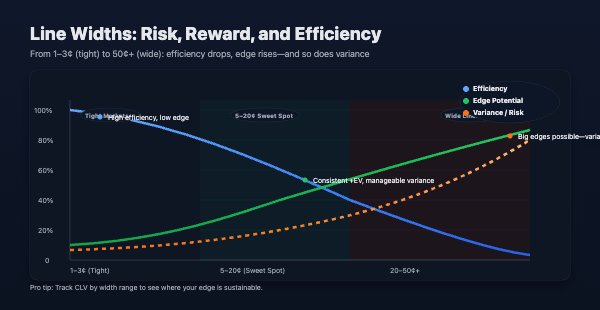
Using a simple model, we can chart how efficiency, edge potential, and variance move as line width increases:
- Efficiency (blue): Starts very high at 1–5¢, but drops quickly as width widens.
- Edge Potential (green): Low when lines are tight, but rises significantly in wide markets.
- Variance / Risk (orange): Grows alongside edge potential. A 50¢ line might offer a huge misprice, but also massive variance.
(Imagine the chart here: efficiency falling, while edge potential and variance both climb as width grows.)
Risk/Reward Spectrum of Line Widths
🧠 Findings From the Spectrum
1–3¢ Width (Major Markets)
- Extremely efficient.
- Almost no edge unless you’re exploiting stale numbers.
- Great for liquidity, bad for finding value.
5–20¢ Width (The Sweet Spot)
- Markets are looser, but not chaotic.
- You’ll find consistent +EV opportunities here if you line‑shop.
- Variance is manageable, especially with disciplined staking.
20–50+¢ Width (Props & Niche Markets)
- Books are essentially guessing more.
- Your edge can be enormous if you have a trusted model or sharp reference.
- But variance skyrockets. You need smaller bet sizes and a long‑term mindset.
✅ Practical Takeaways
- Don’t waste your energy grinding only tight markets — the edge just isn’t there.
- Focus your volume on the 5–20¢ range, where efficiency drops enough to reveal opportunities, but variance hasn’t exploded.
- Be selective in 50¢+ width markets. They can be gold mines if you know what you’re doing, but bankroll swings will be sharp.
- Always size bets relative to variance. Use fractional Kelly or a conservative staking plan when betting into wide lines.
🏁 Conclusion
Line width is more than just a number — it’s a window into the balance between efficiency, edge, and risk. The tighter the line, the harder it is to beat. The wider the line, the more opportunity there is, but the more volatility you’ll face.
If you’re serious about long‑term profitability, target the middle ground (5–20¢ widths) for consistent positive EV, and approach wider markets with caution, smaller stakes, and strong models.
💡 Pro tip: Track not just your ROI, but also your Closing Line Value (CLV) across different width ranges. Over time, you’ll see exactly which widths deliver sustainable profit for your style of betting.